OBJECTIVE:
Perform the translation and cross-cultural adaptation of the severity scale to measure activity in patients with chronic prurigo: Prurigo Control Test (PCT) for the locality of Río de la Plata, Argentina.
METHODS:
A cross-sectional study using a mixed-methods (qualitative and quantitative) approach was performed. The process involved seven stages: translation, expert reconciliation, back-translation into English, equivalence review, expert evaluation, cognitive interviews with patients, and development of the final version.
RESULTS:
A Spanish version of the questionnaire was obtained. Eleven patients were interviewed. The median age was 70 years (IQR 59-75), and the median disease duration was 24 months. Correct comprehension of all items was achieved by 90% of the patients. The only modification made was the addition of the clarification “(de la piel)” [of the skin] following the term “cutánea” [cutaneous] to ensure comprehension across all educational levels.
CONCLUSIONS:
The translated and adapted version of the PCT constitutes a simple, objective, and valuable tool for assessing disease control and therapeutic response in the daily clinical care of Spanish-speaking patients.
OBJETIVO:
Realizar la traducción y adaptación transcultural de la escala de severidad para medir la actividad de la enfermedad en pacientes con prurigo crónico: Prurigo Control Test (PCT) para la región del Río de la Plata, Argentina.
MÉTODOS:
Estudio de corte transversal, con metodología cuali-cuantitativa, que comprendió un proceso de siete pasos: traducción, conciliación por expertos, retro-traducción al inglés, revisión de equivalencias, evaluación por expertos, entrevistas cognitivas a pacientes y elaboración de la versión final.
RESULTADOS:
Se obtuvo una versión en español del cuestionario. Se entrevistaron 11 pacientes. La mediana de edad fue de 70 años (RIC 59-75) y la mediana de duración de la enfermedad de 24 meses. El 90% comprendió correctamente todos los ítems. La única modificación realizada fue la inclusión de la aclaración “(de la piel)” a continuación del término “cutánea” para asegurar la comprensión en todos los niveles educativos.
CONCLUSIONES:
La versión traducida y adaptada del Prurigo Control Test (PCT) constituye un método simple, objetivo y valioso para evaluar el control de la enfermedad y su respuesta terapéutica en la práctica cotidiana en pacientes de habla hispana.
BACKGROUND
Chronic prurigo is a neuroinflammatory skin disease characterized by intense pruritus and the appearance of skin lesions as a consequence of it.1,2
The onset of the disease most frequently occurs between the ages of 50 and 60. It is more common in women and in the Black race.2-4 Worldwide prevalence is variable, with 6.5, 72, and 111 cases per 100,000 inhabitants in Poland, United States, and Argentina, respectively.3-5
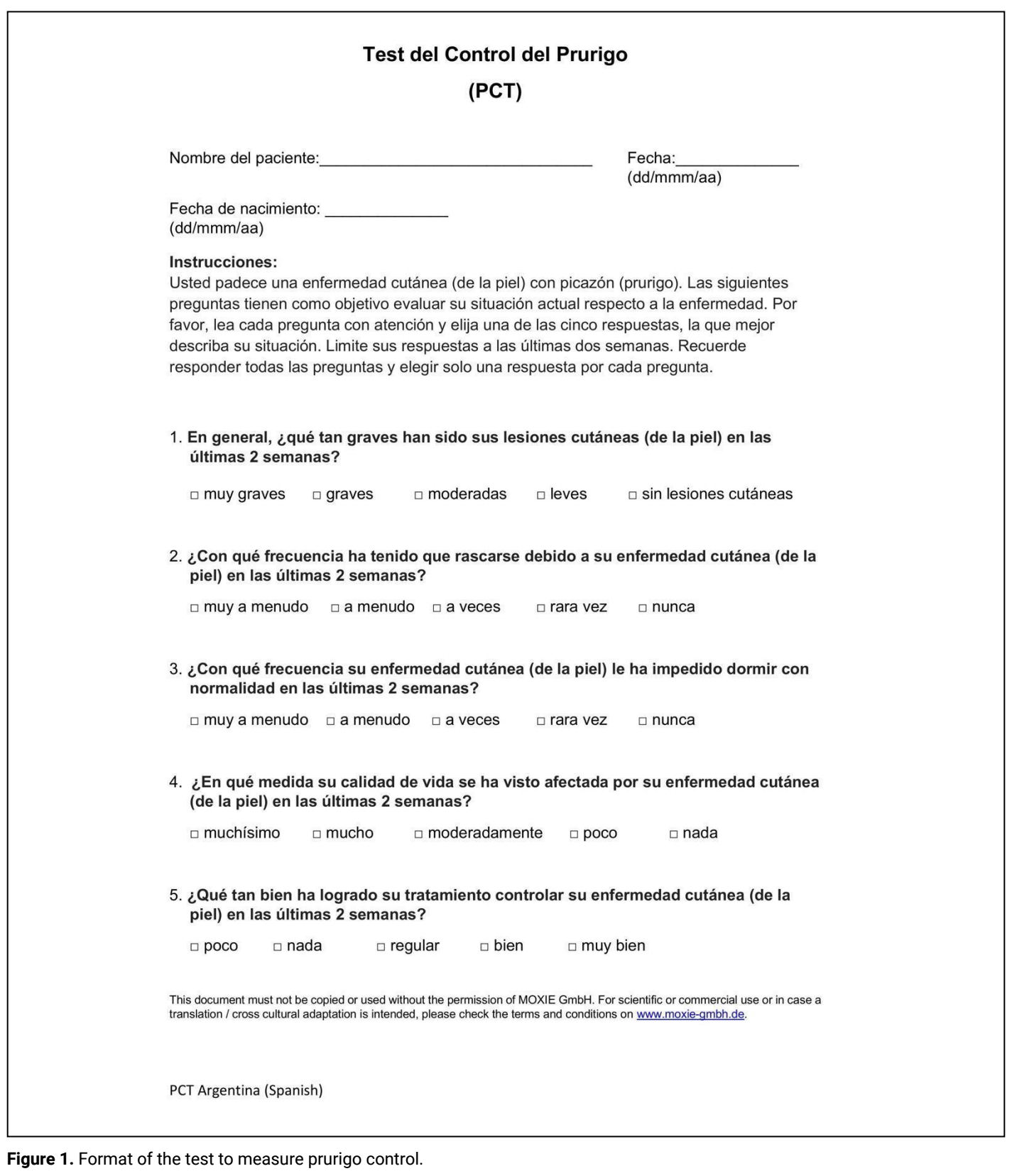
Chronic prurigo has a high impact on patients’ quality of life. Its approach must be holistic and comprehensive, and treatment multimodal, with the goal of controlling the disease and reducing morbidity and mortality.1,2 Currently, clinical evaluation of treatment response and assessment of disease control are complex and present difficulties. To perform an objective evaluation of treatment response, according to research studies, scales such as: IGA (Investigator Global Assessment score), Peak Pruritus NRS (Peak Pruritus Numerical Rating Scale), and DLQI (Dermatology Life Quality Index) are typically used, which may be impractical for outpatient care.6-8 Recently, Metz and colleagues developed a new scale: Prurigo Control Test (PCT). This measurement instrument was designed and validated in 2024 in English.9 It consists of a direct patient-reported outcome, brief and simple, which allows for understanding the global perception of the chronic prurigo status and its control with the established treatment. It includes a scale from 0 to 20 points that evaluates 5 aspects (0 to 4 points for each): 1) severity of skin lesions, 2) frequency of scratching, 3) impact on sleep, 4) impact on quality of life, and 5) treatment efficacy.9
With the intention of having this questionnaire available in Spanish, the objective of this study was: to perform the translation and cross-cultural adaptation of the severity scale to measure disease activity in patients with chronic prurigo: Prurigo Control Test (PCT) for the Río de la Plata region, Argentina.
METHODS
Study design
Cross-sectional study whose methodology includes qualitative and quantitative components.
Methodology for translation and cross-cultural adaptation
The translation and cross-cultural adaptation process included seven steps: 1) translation of the original questionnaire into the target language carried out by two bilingual translators, whose native language was Spanish, one with experience in medicine or medical terms and the other with knowledge of everyday language terms; 2) comparison and reconciliation of the first two translated versions into the target language by a committee of bilingual experts; 3) back-translation into the original language by two bilingual translators (native English speakers), blinded to the original questionnaire; 4) review of the back-translated version into the original language by a bilingual committee, consisting of the four translators and the expert committee from step 2, by comparing the two back-translations with each other and with the original questionnaire; 5) evaluation of the first version by a committee consisting of two researchers with experience in chronic prurigo, who assessed conceptual, semantic, grammatical, and content equivalences of the translated instrument; 6) cognitive interviews with patients of both genders with chronic prurigo and a wide age range, using the “think aloud” format, conducted according to the proposal by Eardley et al., and audio-recorded for subsequent analysis. This technique consists of asking the participant to verbalize in real time the thoughts that arise while reading and responding to each item, allowing the interviewer to identify comprehension difficulties, ambiguous terms, or misinterpreted questions without needing to infer them from the final answers.10,11 For each question in the questionnaire, the evaluation was performed item by item, recording three dimensions: a) global comprehension (yes/no), b) identification of words or phrases that were difficult, confusing, or disturbing, and c) correct paraphrasing of the concept (yes/no), where the participant was asked to reformulate in their own words what the question was inquiring. This last dimension constitutes the most robust way to verify that the concept was correctly interpreted, as a participant may answer affirmatively when asked if they understood, even when their understanding is incorrect or partial.11 In step 7 of the translation and cross-cultural adaptation process, the analysis of the recorded interviews was performed, registering relevant observations and creating the final version of the translated and adapted Spanish questionnaire.10,11
Authorization was obtained from the developers of the original English questionnaire, who also participated by providing comparative feedback between the original version and the back-translation from Spanish to English, as well as suggestions on the observations obtained from the cognitive interviews. For reporting the results, the methodology proposed by Streiner et al. was followed.11
The study complied with the ethical standards of the institutional and national research committee, and with the 1964 Declaration of Helsinki and its subsequent amendments, as well as with comparable ethical standards. The interviewed individuals provided written informed consent. The protocol was approved by the ethics committee for research protocols of the Hospital Italiano de Buenos Aires (protocol 7467).
RESULTS
The translation process, with its 7 steps, allowed for obtaining a questionnaire in the Spanish language (Figure 1).
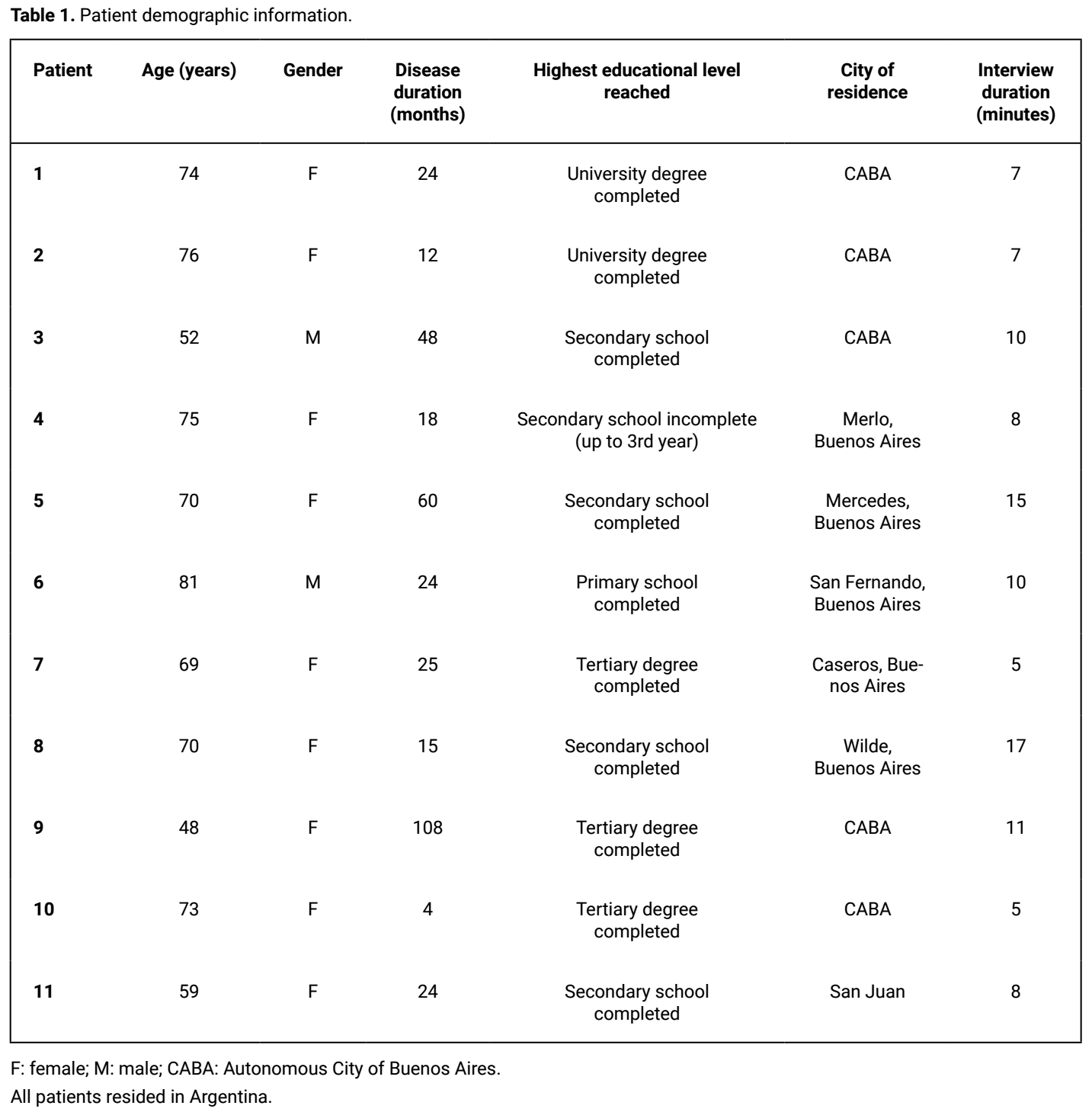
Cognitive interviews were conducted with 11 patients diagnosed with CP, 9 of whom were female. Their demographic characteristics are detailed in Table 1. All patients resided in urban areas at the time of the study. The median age was 70 years (IQR 59–75), and the median disease duration was 24 months (IQR 18–60). Educational levels were: primary (n=1), secondary (n=4), tertiary (n=3), and university (n=2). The median time for completing the interviews was 8 minutes (IQR 7–11).
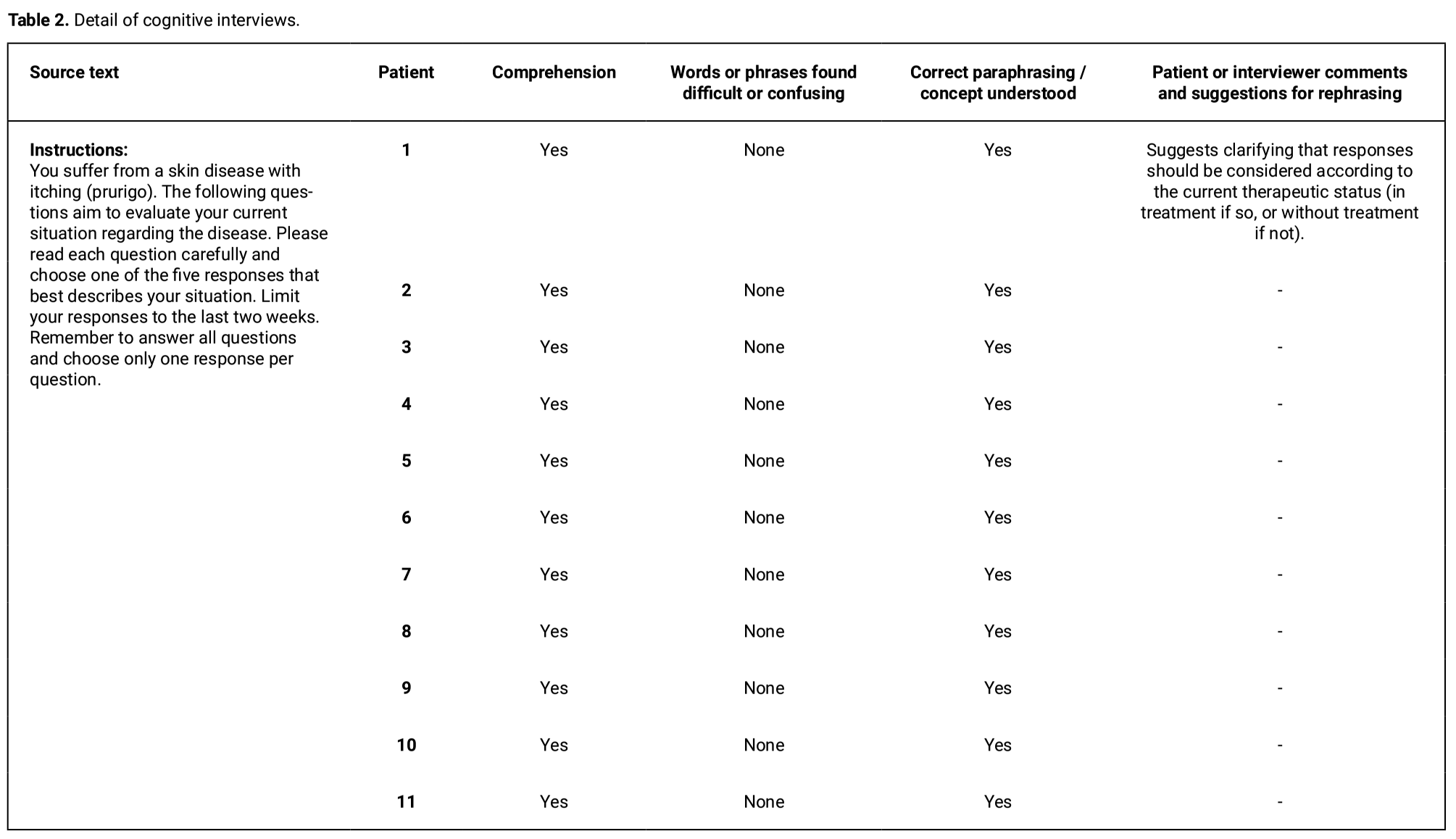
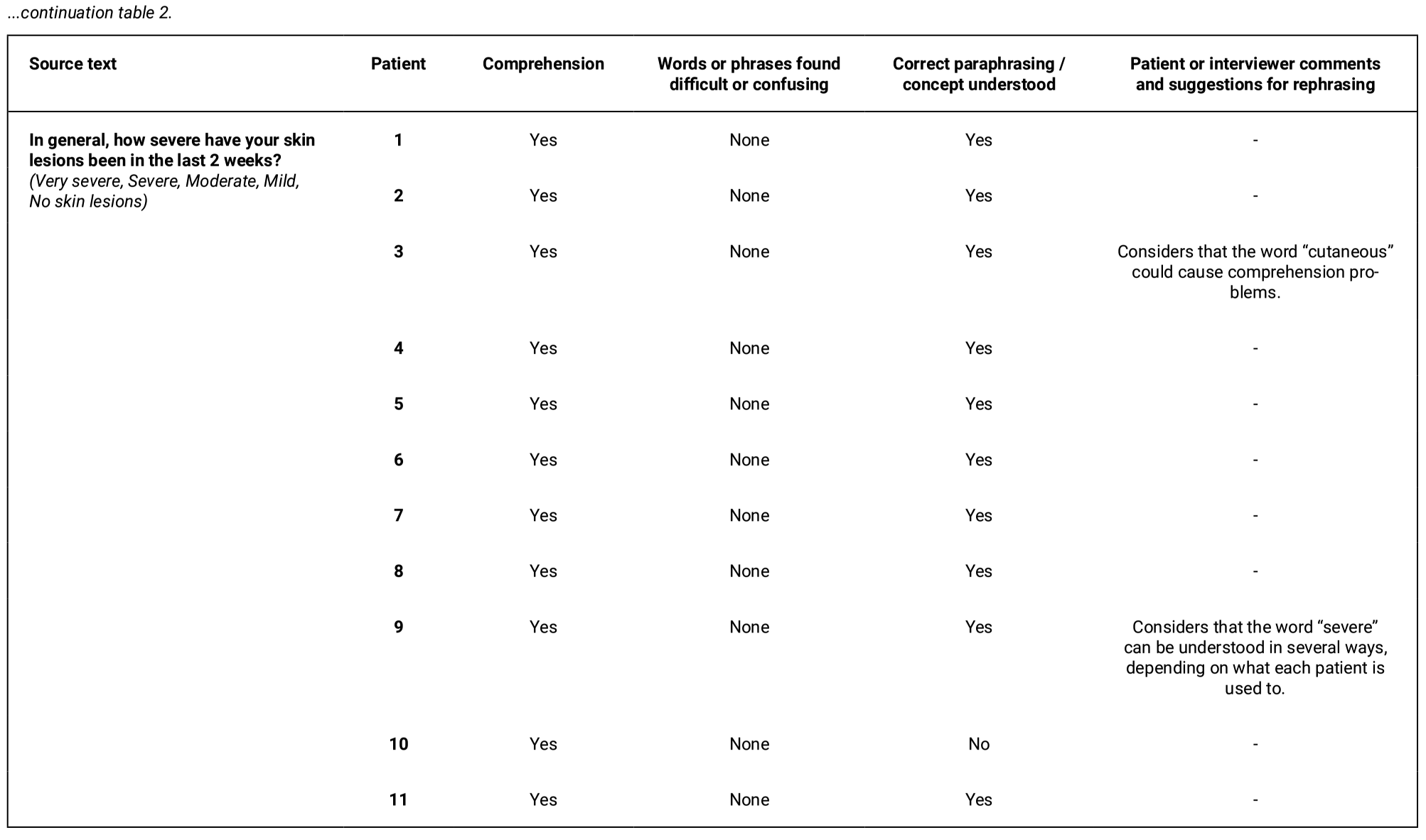
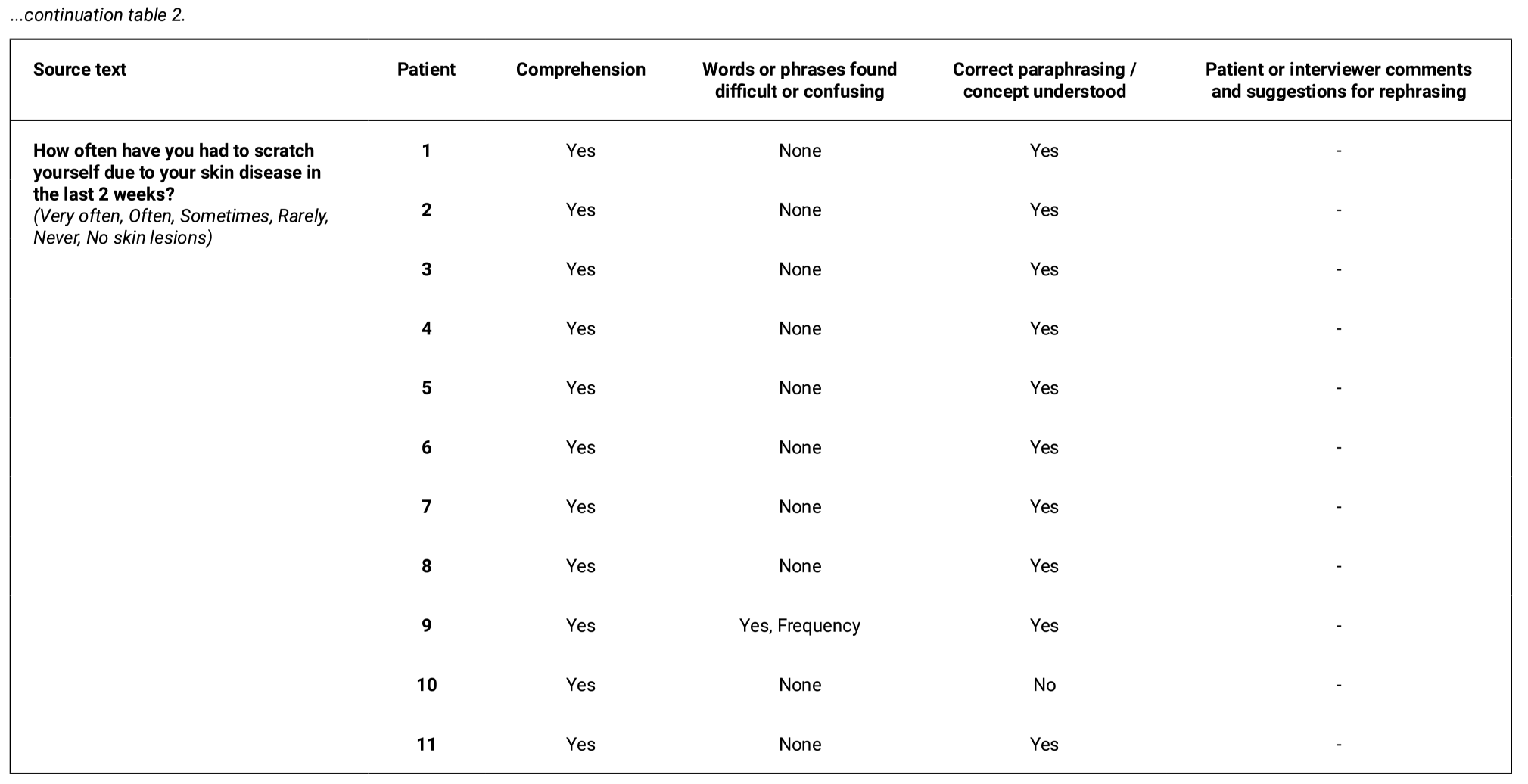
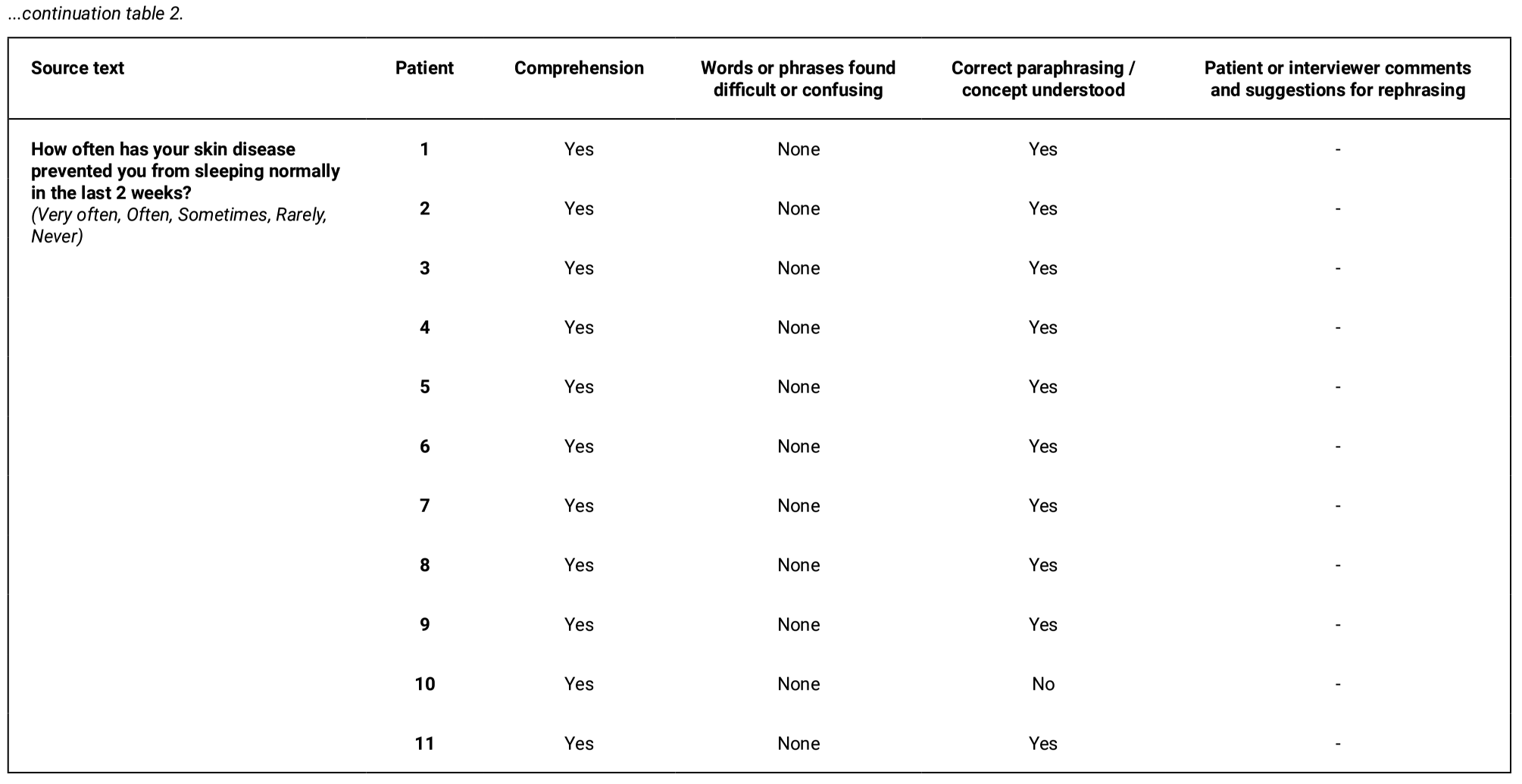
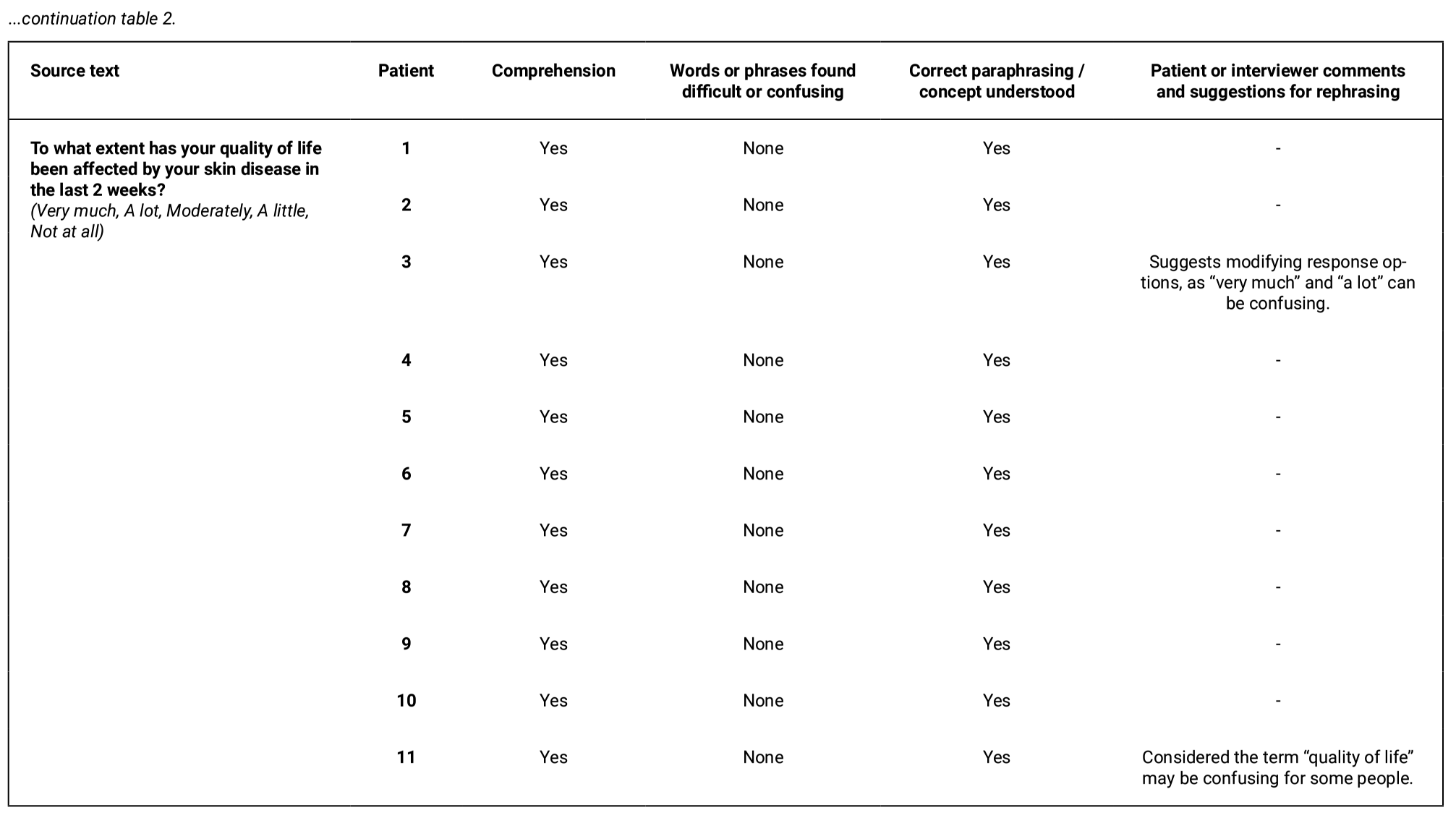
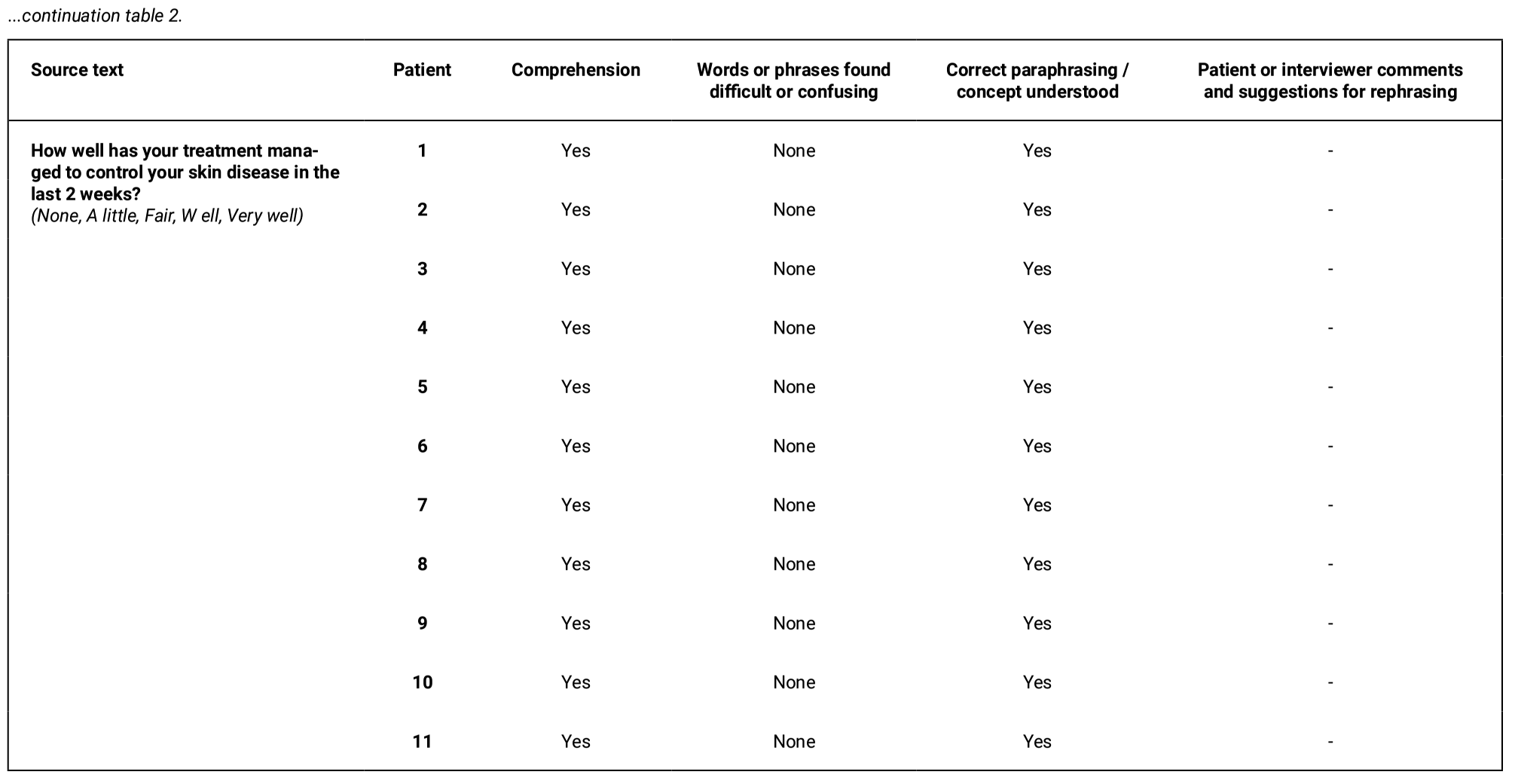
All patients (11/11) stated that they correctly understood the 6 items (the instructions and the five questions) that make up the questionnaire. When asked to paraphrase them, 1/11 patients was unable to do so for questions 1, 2, and 3. The most frequent observations were: the term “cutánea” [cutaneous] was pointed out as potentially confusing by one patient (question 1); the distinction between the options “muchísimo” [very much] and “mucho” [a lot] generated an isolated observation (question 4); and the term “calidad de vida” [quality of life] was questioned by one participant (question 4). No observations were recorded regarding the questions that implied a lack of understanding of the central concept. Based on the item-by-item analysis of all interviews, it was decided to incorporate the clarification “(de la piel)” [(of the skin)] after the term “cutánea,” in order to improve comprehension without altering the original meaning of the instrument. The results of the cognitive interviews by item are presented in Table 2.
DISCUSSION
This study carried out the translation and adaptation of the questionnaire developed by Metz et al.9 The resulting questionnaire provides a new, potentially useful method for objectifying chronic prurigo activity in Spanish-speaking patients.1,2
The translation process and subsequent analysis through cognitive interviews revealed that no significant cultural differences were observed in the use of vocabulary for this particular questionnaire. Each item of the questionnaire was evaluated individually and systematically in three dimensions: 1) global comprehension (did you understand?), 2) identification of difficult or ambiguous words or phrases, and 3) correct paraphrasing of the concept (yes/no). This item-by-item approach is recommended by methodological literature specialized in scale adaptation. Streiner, Norman, and Cairney, in Health Measurement Scales in 2015, establish that the goal of cognitive interviews is to detect ambiguous items, incomprehensible terms, or double-meaning questions, and that the central evaluation criterion is the respondent’s ability to correctly paraphrase the concept, not just to report whether they “understand” or not. The same text points out that asking whether a phrase or word was difficult and requesting the participant to reformulate the item in their own words constitutes the standard way to assess comprehensibility at the level of each individual item. Through the completed steps, it was determined that the global comprehension rate for each item studied was 100%, and the correct paraphrasing rate was 91% to 100% depending on the item. This highlights the clarity and correct interpretation of the questions, in accordance with the exploratory objective of each of them, as well as clarifying that each item of the questionnaire can measure what it intends to. This is what is called cross-cultural adaptation.10,11 This methodology is consistent with what is described by Streiner et al., who emphasize that for the cross-cultural adaptation stage (unlike formal psychometric validation), qualitative item-by-item evaluation through cognitive interviewing is the appropriate method, and that quantitative difficulty analyses (such as difficulty indices from Item Response Theory) correspond to later phases of psychometric validation, which are currently underway.
However, based on the observations made by the interviewees, a directed review of the literature on self-administered instruments and educational materials in Spanish intended for patients was carried out. In methodologically comparable works, such as the cross-cultural adaptation into Spanish of the Dermatology Life Quality Index (DLQI), a consistent use of accessible terminology for the general population is observed, using the term “piel” [skin] instead of using technical vocabulary such as the term “cutánea” [cutaneous].12 Based on this precedent, it was decided to keep the original term but add the clarification “(de la piel)” immediately after “cutánea,” in order to improve patient comprehension.
This research was conducted at a private university hospital where the care of middle-class patients living in an urban environment predominates, which could introduce socioeconomic and cultural biases to this work and limit the possibility of extrapolating the utility of the questionnaire to a different population. On the other hand, and in line with the higher prevalence of this disease in females (also documented in our population by our research group)5, women predominated in our sample.
Since the Spanish language of the Río de la Plata region has its linguistic peculiarities, it would be advisable to carry out separate cross-cultural adaptations before administering this scale on a massive scale in other Spanish-speaking contexts.
CONCLUSIONS
We consider that the translated and adapted Spanish version of the PCT constitutes the initial stage of work to provide a potentially useful tool that will contribute to objectifying disease activity and treatment response in the daily care of Spanish-speaking CP patients. Although the translation and adaptation were performed considering the Spanish of the Río de la Plata (Argentina) as the target language, we consider that this tool will be adaptable for use in other Spanish-speaking countries and will help counteract the communication deficit between non-Spanish-speaking professionals and Spanish-speaking patients.
Formal psychometric validation is required to determine the construct validity, internal consistency, and reproducibility to determine that it adequately measures prurigo control in the Spanish-speaking population. This work is currently under development by our research group.
Declaraciones
Acknowledgments
Moxie GmbH.
Funding
This investigator-initiated study was funded by Sanofi. The funding entity had no influence on the study design, data analysis, or interpretation.
Conflicts of interest
The authors declare no conflicts of interest.
Authors’ contributions
Ana Clara Torre, Agustin Wagner, Sergio Adrián Terrasa, and Luis Daniel Mazzuoccolo conceived and designed the study and supervised the overall development of the project. Anama Di Prinzio, Nadia Bejar, and María Valeria Angles conducted the cognitive interviews. Ana Clara Torre and Sergio Adrián Terrasa performed the data analysis and interpretation of the results. Ana Clara Torre and Agustin Wagner drafted the initial manuscript. All authors participated in the critical revision of the text, provided key intellectual commentary, and approved the final version for publication.
Key references
Docampo-Simón A, Sánchez-Pujol MJ, Silvestre-Salvador JF. Chronic prurigo: an update. Actas Dermosifiliogr. 2022;113(6):563-574. doi:10.1016/j.ad.2021.11.001.Metz M, Zeidler C, Hawro T, et al. Development and validation of a patient-reported outcome measure to assess disease control in chronic prurigo. JAMA Dermatol. 2024;160(2):187-193. doi:10.1001/jamadermatol.2023.5146.
Permissions
All figures and tables presented in this manuscript are original and were created by the authors
Permissions
All figures and tables presented in this manuscript are original and were created by the authors
Agradecimientos
Moxie GmbH.
Financiamiento
Este estudio, iniciado por el investigador, contó con el financiamiento de Sanofi. La entidad financiadora no tuvo influencia alguna en el diseño del estudio, el análisis de los datos ni en su interpretación.
Conflictos de interés
Los autores declaran no tener conflicto de intereses.
Contribución de los autores
Ana Clara Torre, Agustin Wagner, Sergio Adrián Terrasa y Luis Daniel Mazzuoccolo concibieron y diseñaron el estudio, y supervisaron el desarrollo general del proyecto. Anama Di Prinzio, Nadia Bejar y María Valeria Angles llevaron a cabo las entrevistas cognitivas. Ana Clara Torre y Sergio Adrián Terrasa realizaron el análisis de los datos y la interpretación de los resultados. Ana Clara Torre y Agustin Wagner redactaron el borrador inicial del manuscrito. Todos los autores participaron en la revisión crítica del texto, aportaron comentarios intelectuales clave y aprobaron la versión final para su publicación.
Referencias clave
Docampo-Simón A, Sánchez-Pujol MJ, Silvestre-Salvador JF. Chronic prurigo: an update. Actas Dermosifiliogr. 2022;113(6):563-574. doi:10.1016/j.ad.2021.11.001.Metz M, Zeidler C, Hawro T, et al. Development and validation of a patient-reported outcome measure to assess disease control in chronic prurigo. JAMA Dermatol. 2024;160(2):187-193. doi:10.1001/jamadermatol.2023.5146.
Permisos
Todas las figuras y tablas presentadas en este manuscrito son originales y fueron elaboradas por los autores
Permisos
Todas las figuras y tablas presentadas en este manuscrito son originales y fueron elaboradas por los autores
REFERENCIAS
- 1.Docampo-Simón A, Sánchez-Pujol MJ, Silvestre-Salvador JF. Chronic prurigo: an update. Actas Dermosifiliogr 2022; 113 (6): 563-574. doi:10.1016/j.ad.2021.11.001
- 2.Satoh T, Yokozeki H, Murota H, et al. Guidelines for the diagnosis and treatment of prurigo. J Dermatol 2021; 48 (1): e1-e18. doi: 10.1111/1346-8138.15613
- 3.Ryczek A, Reich A. Prevalence of prurigo nodularis in Poland. Acta Derm Venereol 2020; 100 (11): adv00155. doi: 10.2340/00015555-3518
- 4.Ständer S, Augustin M, Berger T, et al. Prevalence of prurigo nodularis in the United States of America: a retrospective database analysis. JAAD Int 2020; 2: 28-30. doi:10.1016/j.jdin.2020.10.009
- 5.Wagner A, Torre AC, Mazzuoccolo LD, Di Prinzio A, et al. Prevalencia del prurigo crónico en Argentina: un estudio descriptivo transversal. Rev Alerg Mex 2026; 73 (1): 58-65. doi: 10.29262/ram.v73i1.1580
- 6.Zeidler C, Pereira MP, Augustin M, Spellman M, et al. Investigator’s Global Assessment of chronic prurigo: a new instrument for use in clinical trials. Acta Derm Venereol 2021; 101 (2): adv00401. doi:10.2340/00015555-3746
- 7.Yosipovitch G, Reaney M, Mastey V, et al. Peak Pruritus Numerical Rating Scale: psychometric validation and responder definition for assessing itch in moderate-to-severe atopic dermatitis. Br J Dermatol 2019; 181 (4): 761-769. doi:10.1111/bjd.17744
- 8.Basra MK, Fenech R, Gatt RM, Salek MS, et al. The Dermatology Life Quality Index 1994-2007: a comprehensive review of validation data and clinical results. Br J Dermatol 2008; 158 (5): 931-947. doi:10.1111/j.1365-2133.2008.08482.x
- 9.Metz M, Zeidler C, Hawro T, et al. Development and validation of a patient-reported outcome measure to assess disease control in chronic prurigo. JAMA Dermatol 2024; 160 (2): 187-193. doi:10.1001/jamadermatol.2023.5146
- 10.Wild D, Grove A, Martin M, et al. Principles of good practice for the translation and cultural adaptation process for patient-reported outcomes (PRO) measures: report of the ISPOR Task Force for Translation and Cultural Adaptation. Value Health 2005; 8 (2): 94-104. doi:10.1111/j.1524-4733.2005.04054.x
- 11.Streiner DL, Norman GR, Cairney J. Health Measurement Scales: A Practical Guide to Their Development and Use. 5th ed. Oxford University Press; 2015.
- 12.De Tiedra AG, Mercadal J, Badía X, Mascaró JM, et al. Adaptación transcultural al español del cuestionario Dermatology Life Quality Index (DLQI): el índice de calidad de vida en dermatología. Actas Dermosifiliogr 1998; 89 (12): 692-700.