Angioedema (AE) is a heterogeneous syndrome of episodic, self-limited swelling of subcutaneous and submucosal tissues. Its two principal mechanistic subtypes, mast-cell-mediated (histaminergic) and bradykinin-mediated, share clinical features but diverge entirely in pathophysiology and treatment. This distinction carries life-or-death consequences: bradykinin-mediated AE does not respond to antihistamines, corticosteroids, or epinephrine, and misclassification delays access to effective therapy in a disease capable of causing fatal laryngeal obstruction. Among bradykinin-mediated variants, hereditary angioedema (HAE) due to C1-inhibitor deficiency (HAE-C1INH) and with normal C1-inhibitor levels (HAE-nC1INH) remain among the most underdiagnosed conditions in the region. HAE is a devastating disease; in addition to being potentially life-threatening, its recurrent and unpredictable nature imposes a substantial burden, keeping patients in a state of constant alertness that drastically impairs their quality of life and is associated with high rates of anxiety and depression, as documented in studies of health-related quality of life in this population.1 This letter offers a clinically grounded regional perspective that integrates epidemiological evidence and public health considerations to inform practice and policy at all levels of care.
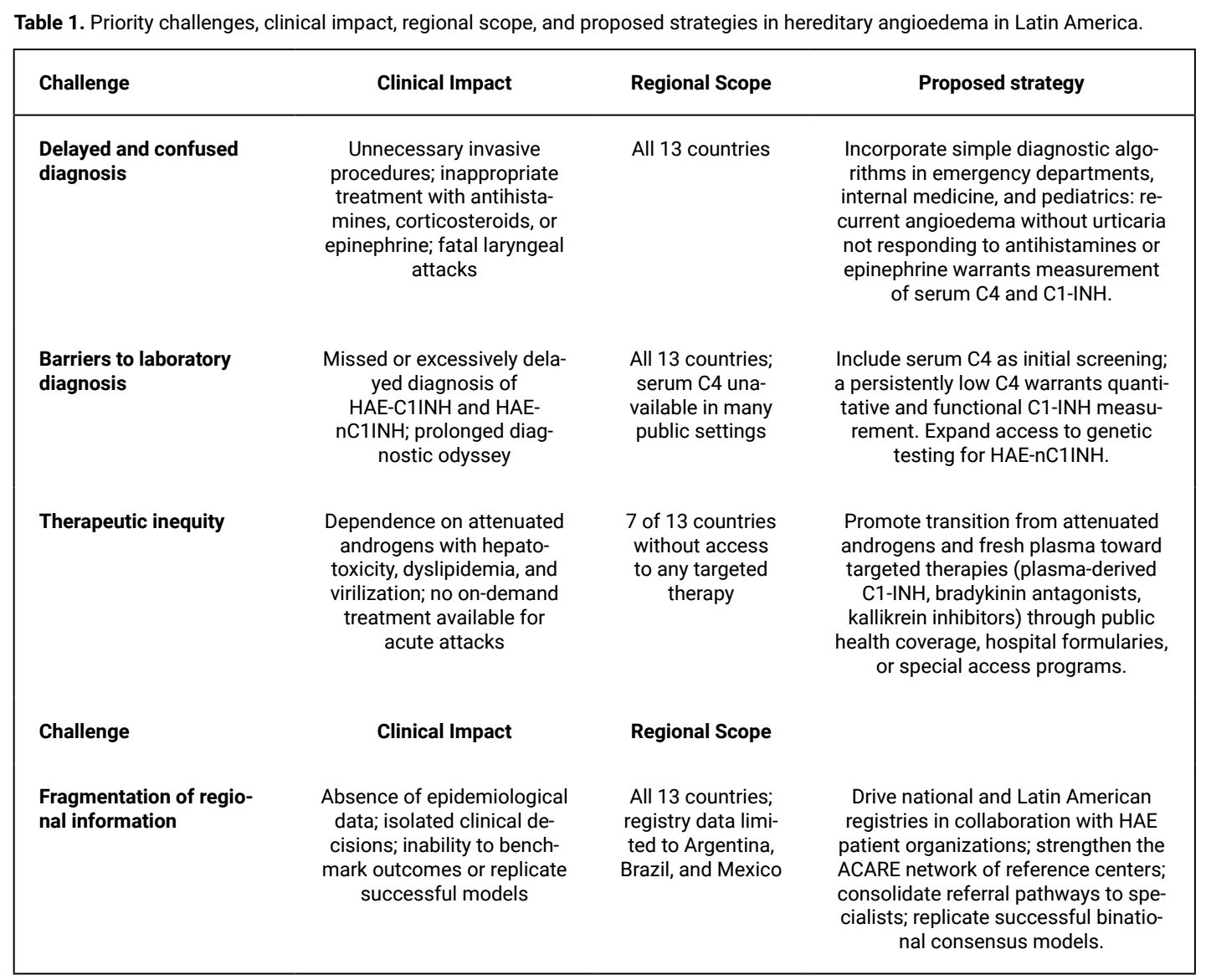
Diagnostic delay is a primary obstacle; in Mexico, the time from symptom onset to confirmed diagnosis can extend up to 20 years.2 Multinational data confirm that limited access to on-demand treatment is directly associated with longer therapeutic delays and impaired patient-reported outcomes.3 The common denominator of this delay is diagnostic confusion: bradykinin-mediated angioedema is repeatedly and incorrectly managed as an allergic reaction, chronic urticaria, anaphylaxis, or a surgical abdominal emergency. The clinical signal that must not be missed is the following: recurrent angioedema without urticaria that does not respond to antihistamines, corticosteroids, or epinephrine. When bradykinin-mediated angioedema is suspected, measuring serum C4 and quantitative and functional C1-inhibitor levels represents a basic and widely accessible diagnostic strategy.
The barriers are structural and profoundly unequal. Of the thirteen countries in the region, only six (Argentina, Brazil, Chile, Colombia, Mexico, and Peru) have any degree of access to targeted therapies or on-demand treatments for HAE; access is defined here as the regulatory approval and availability of at least one specific HAE therapy through any mechanism, including public health coverage, hospital formulary, special access programs, or private market authorization. In the remaining countries, patients not only lack current therapeutic options but also remain unprotected against life-threatening attacks, representing an unacceptable gap in access to care for a treatable condition. In Brazil, a real-world study documented the widespread use of danazol in the public health system as a direct consequence of economic restrictions that limit access to newer therapies.4 Long-term use of attenuated androgens is associated with significant adverse effects, including hepatotoxicity, dyslipidemia, and virilization, further underscoring the need for access to safer, targeted therapies. The Argentine and Mexican consensus documents have established recommendations adapted to resource-limited contexts,5,6 but their implementation remains uneven across the region.
Faced with this fragmented reality, and in the absence of a regional health authority to coordinate common policies, collaborative work among national HAE patient organizations is a strategic necessity. Regional cooperation enables the replication of successful access models, the sharing of epidemiological data, the development of professional networks, peer-to-peer consultation among specialists, and the support of countries with less institutional development. Existing initiatives such as the Latin American guideline: Diagnosis and Management of Hereditary Angioedema in Latin America: International Recommendations and Regional Practice Realities, the ACARE network of reference centers, and binational consensus collaborations demonstrate that regional coordination is not only necessary but already underway in parts of the region.7 The priority challenges and proposed strategies to address this regional crisis are summarized in Table 1.